Spring in Slovenia
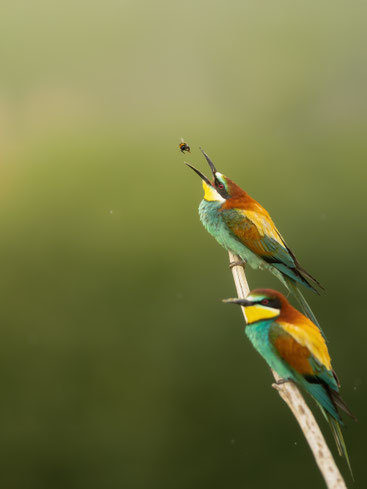
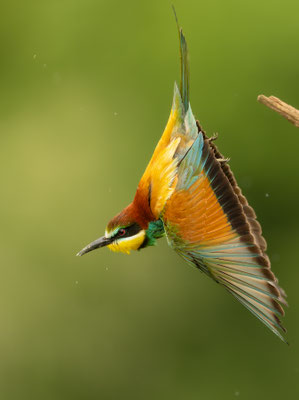
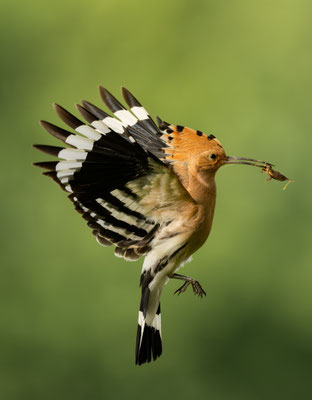
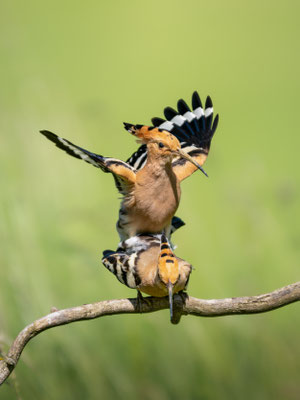
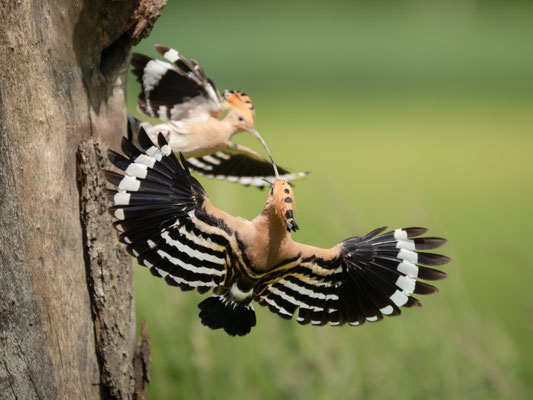
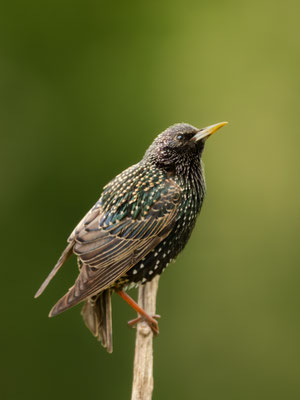
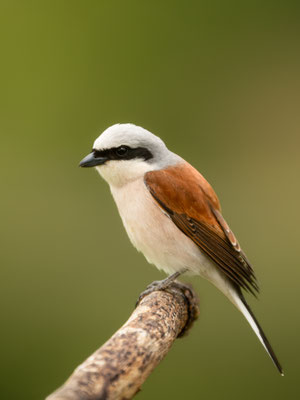
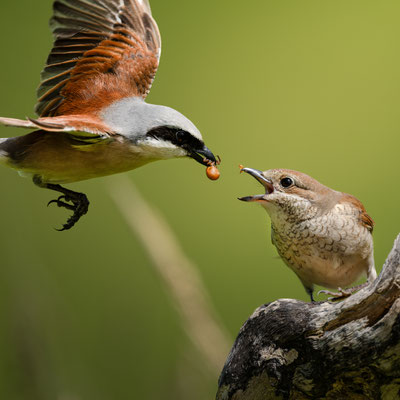
In May 2026, I spent several days in the Kog region of Slovenia focusing on photography of Eurasian Hoopoe, European Bee-eater, Eurasian Wryneck, Common Cuckoo, Black Woodpecker, European Green Woodpecker, Red-backed Shrike and various other songbirds. The landscape is a beautiful wine-growing area with rolling hills interspersed with extensive woodland. In spring, fresh greens dominate the scenery, with young leaves and grasses creating vibrant, natural backgrounds in the images. With the exception of one day, the weather remained dry. Even a rainy morning offered interesting photographic opportunities.
All photography was carried out exclusively from hides, both permanent structures and mobile camouflage tents. Distances typically ranged from around 5.5 meters up to a maximum of about 20 meters, for example at a Black Woodpecker nesting cavity. In terms of equipment, lenses with varying focal lengths are highly beneficial. Due to the dense canopy, light conditions can become quite challenging, making fast lenses a clear advantage. For this reason, I frequently used a 200mm f/2, both with and without a 1.4x teleconverter, allowing me to capture movement and flight with fast shutter speeds. In many situations, especially with better light and smaller birds, the Nikon 800mm f/6.3 also proved to be very effective.
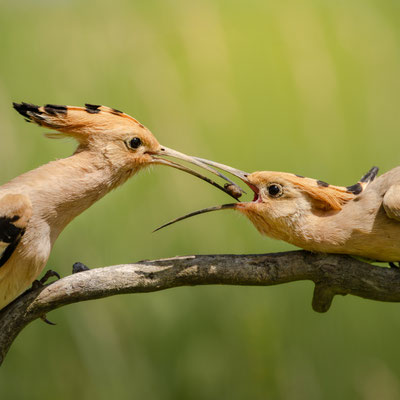
My personal highlights were definitely the Eurasian Hoopoes, which we were able to observe particularly well on the first and last day. Watching the behavior of a pair was especially rewarding.
Another standout location was a hide for the Common Cuckoo, beautifully situated on a small hill overlooking the vineyards. From there, not only cuckoos but also bee-eaters, red-backed shrikes,
yellowhammers, and familiar garden birds could be observed. Overall, it was a wonderful experience. Many thanks to the team at Fotonatur.
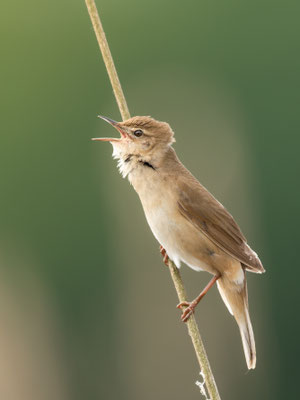
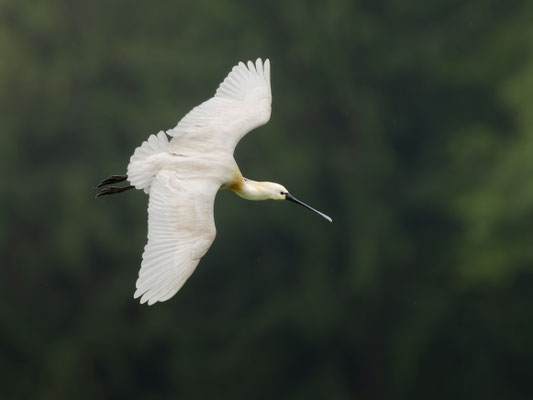
On the way there by car, I also made a stop at a small lake in Slovenia, a great spot for observing various waterbirds. Among them were Black-crowned Night Herons, several species of warblers,
and even a Eurasian Spoonbill briefly appeared. In the surrounding woodland, numerous Golden Orioles could be heard calling from the treetops.