Winter Raptors in the Hortobagy Puszta
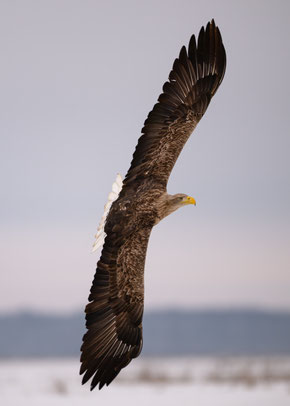
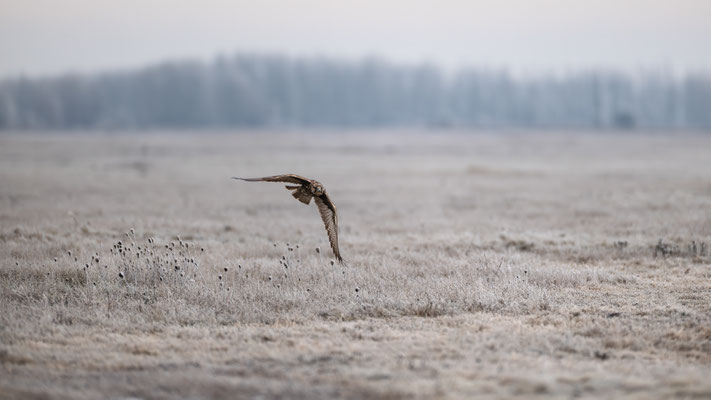
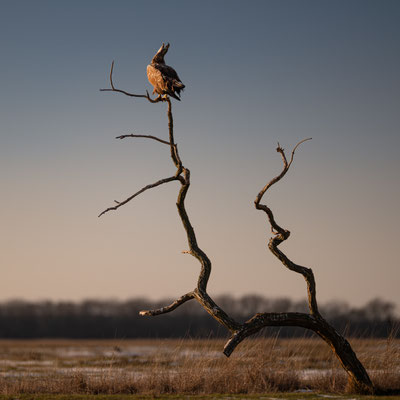
The Hortobágy Puszta in eastern Hungary is part of the vast Great Hungarian Plain and forms the core of Hortobágy National Park, the country’s oldest national park and a UNESCO World Heritage Site. The landscape is an open steppe and wetland mosaic with an almost unbroken horizon, shaped for millennia by grazing and traditional pastoral life. In winter it becomes one of Europe’s most impressive raptor areas, with White‑tailed Eagles, Saker Falcons and Eastern Imperial Eagles using the Puszta as a hunting and roosting ground. In early January 2026 I spent six days there including travel time with a clear focus: photographing White‑tailed Eagles from fixed hides. Because the region usually receives limited winter precipitation, snow is not guaranteed, but on this trip a several cm thin, bright layer covered the steppe and transformed the scenery into a high‑contrast stage for raptor activity.
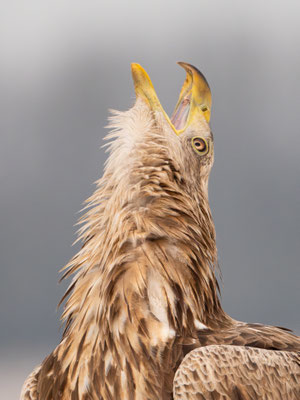
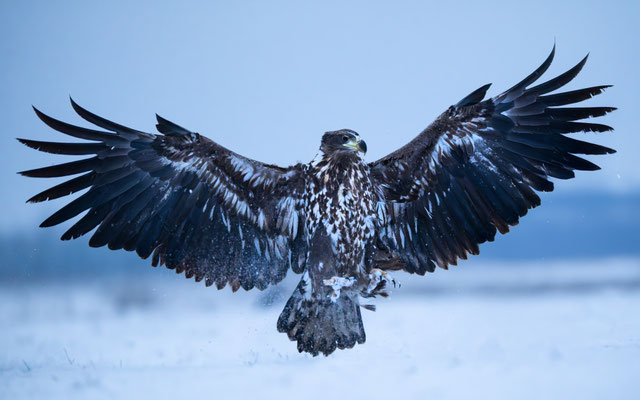
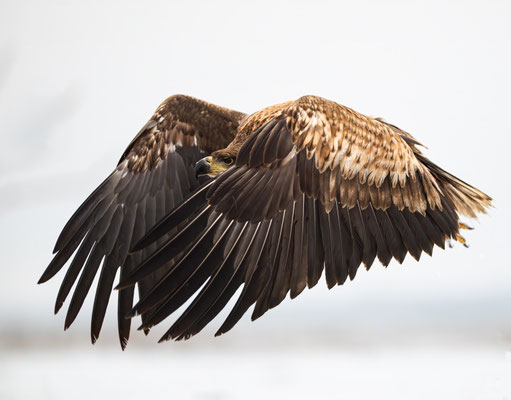
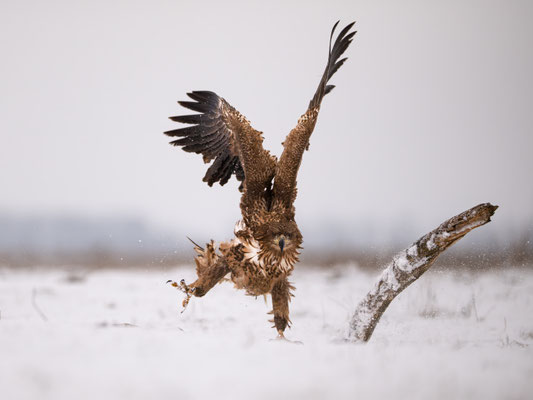
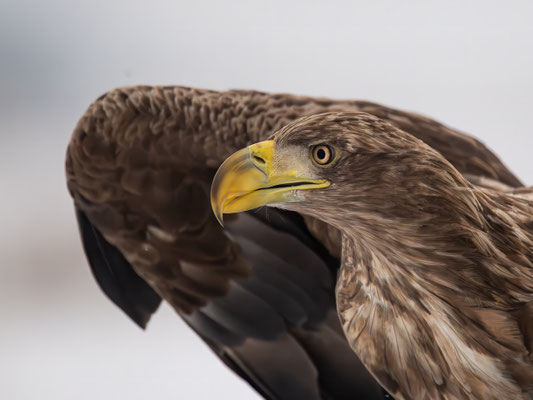
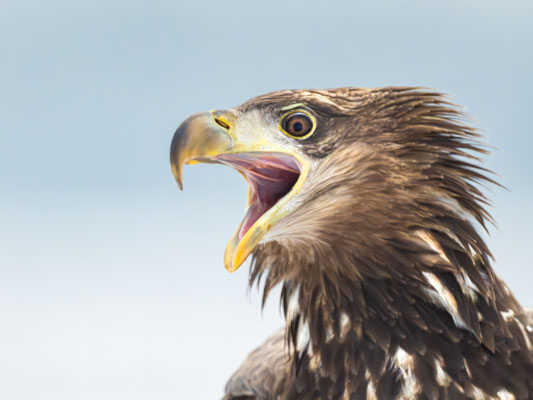
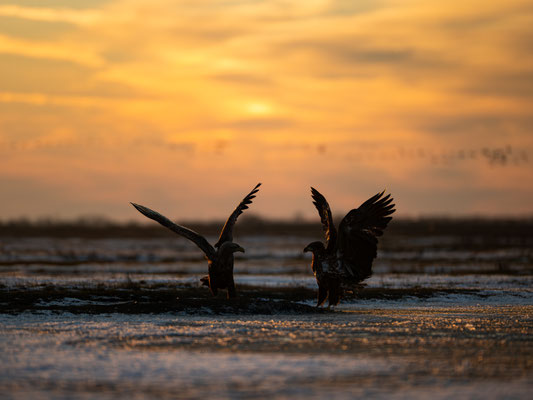
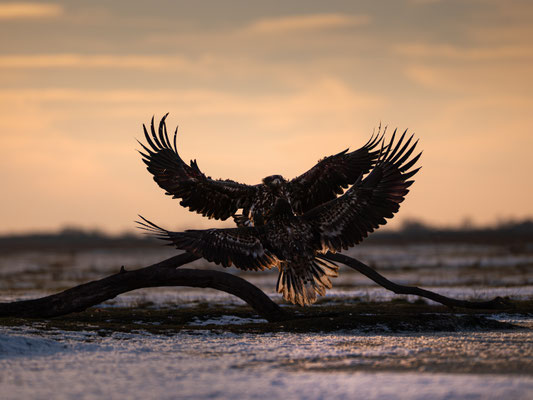
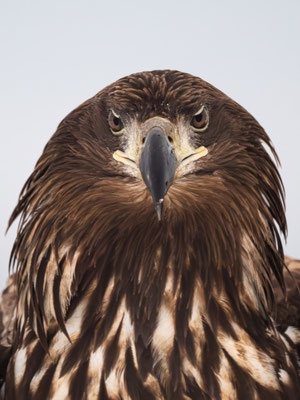
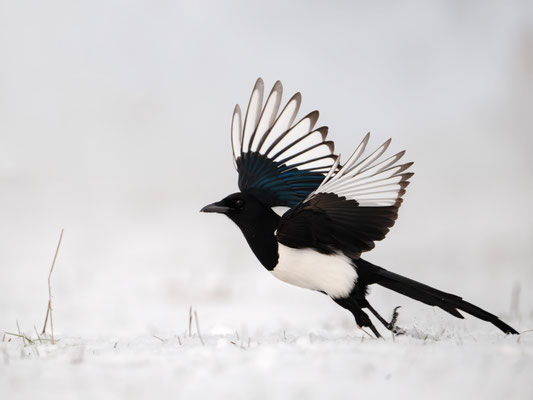
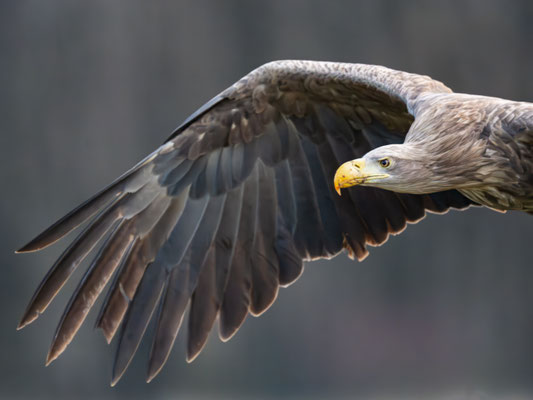
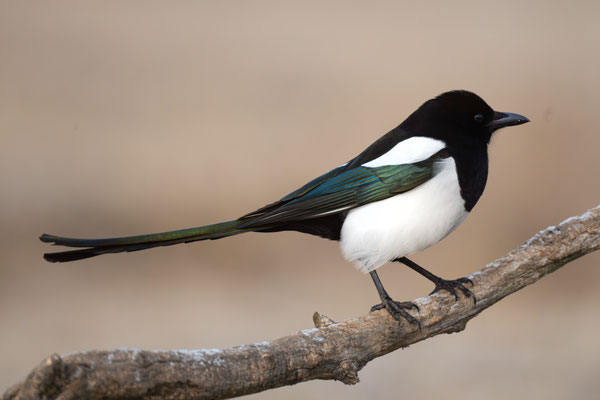
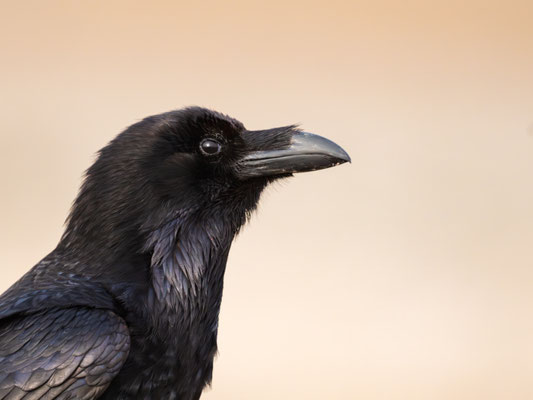
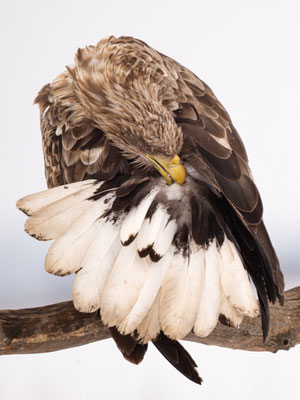
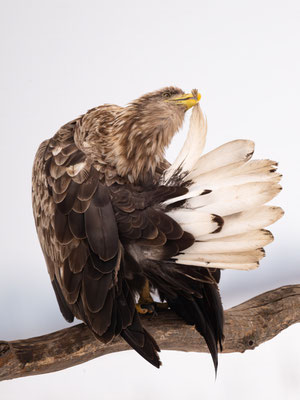
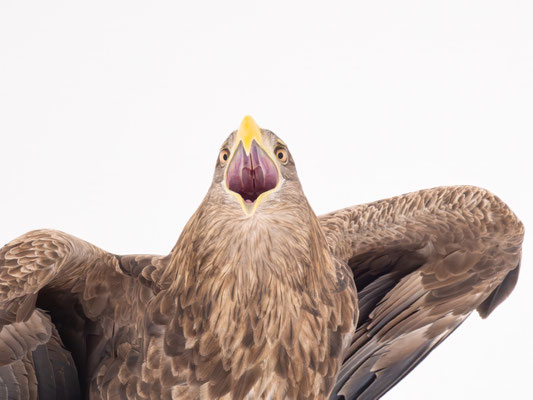
At the eagle hides, the density of birds was striking. On many sessions ten, fifteen or more White‑tailed Eagles were present at the same time, ranging from dark, patchy juveniles to fully plumaged adults. The younger birds, with their high‑contrast mottled feathers, were particularly photogenic and often tested their strength in short, mostly non‑serious tussles. Landings around food frequently triggered a burst of calls, raised heads and photogenic postures, while birds jostled for position or displaced one another from favored spots. These interactions, played out against the snow, produced some of the most dramatic images of the trip. Corvids were constant companions around the feeding areas: mainly crows, jackdaws and occasionally magpies. Their behavior added humor and dynamism to the scenes. Jackdaws sometimes appeared almost playful—one individual paraded around with an eagle feather in its bill—while crows repeatedly tried to annoy the eagles by tugging at their tail feathers. In the background, Common Buzzards and small passerines such as Reed Buntings moved through the tall grasses, completing the winter steppe atmosphere.
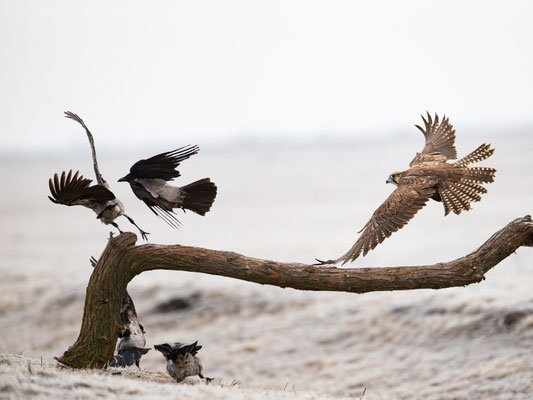
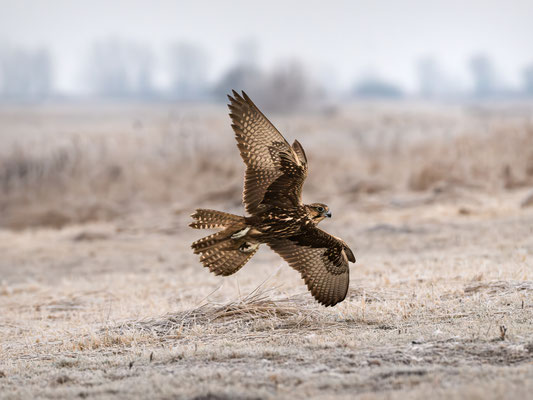
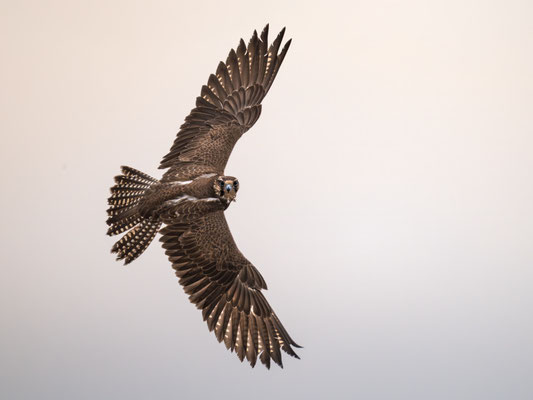
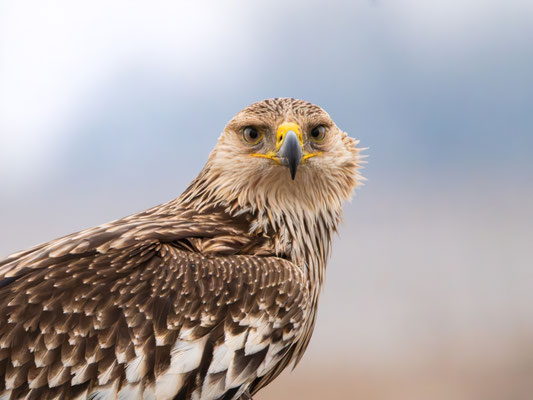
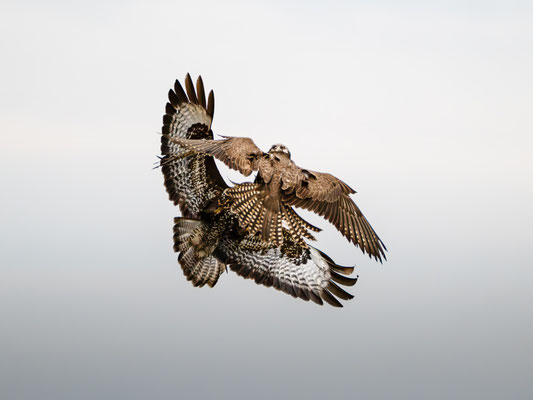
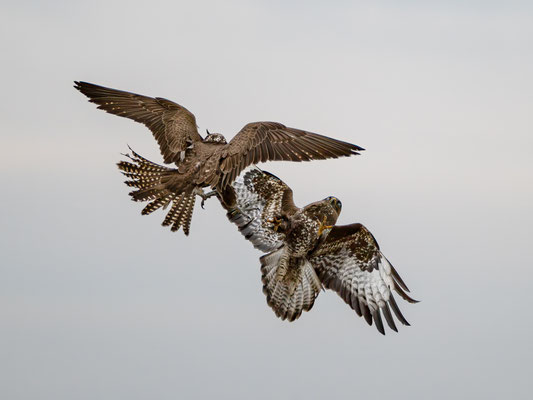
One day was dedicated to a special hide designed for observing Saker Falcons. A pair of falcons put on a series of spectacular aerial displays, performing low, fast attack runs to push crows away from the feeding area and then shooting skywards again with impressive acceleration. The reactions of the crows were clearly visible even through the viewfinder: they ducked under branches, squeezed themselves into any available cover, closed their eyes shortly before the falcons passed and, at times, even pressed their bills into the ground. After several attack sequences, the Sakers used the brief quiet phases to feed on the prepared bait. Once the crows returned, the pattern repeated itself. Buzzards were also present at this hide and occasionally engaged in disputes, measuring their strength in short confrontations. An interesting behavioral note came from a juvenile bird begging persistently for food from an adult. One of the most memorable photographic moments occurred when a Saker Falcon and a buzzard crossed paths in mid‑air, resulting in a fleeting but powerful frame. As an additional highlight, an Eastern Imperial Eagle appeared and settled calmly on a nearby perch, rounding off the raptor line‑up in a way that seemed almost staged.
From a technical point of view, the trip was in someways demanding. The eagles were most active very early in the morning, when light levels were still low and contrast often harsh. I mainly used mya Nikon Z8 and the Nikon 200 mm f/2, mounted via the FTZ2 adapter, and used the lens wide open to gain every possible stop of light. The sheer size of White‑tailed Eagles became a real compositional factor: with wings spread and at distances of 10 to 30 meters, two birds in contact can easily fill a horizontal span of roughly four meters. In practice this meant that focal lengths in the 200–400 mm range were ideal for action, and 400 mm could already be too tight when the birds came close. Curtains of relatively low transparency were also installed in the photo hides with photographic glass panels in order to avoid any reflections and movements that the eagles might still be able to see from outside. As a result, one often had only limited oversight of what was happening and had to rely on looking through the viewfinder. The 800 mm PF lens came into play primarily for portraits and for smaller species such as jackdaws and other corvids, where the extra reach helped isolate the subject cleanly from the background. A borrowed 600 mm PF was also available but, under these conditions and typical subject distances, it turned out to be of limited use and was employed only occasionally.
The journey ended with a visit to a communal roost of Long‑eared Owls, whose quiet presence in a winter grove provided a calm and almost intimate counterpoint to the intense raptor action of the previous days. I would like to thank Lifetravel for the excellent organization and Sakertours for the flawless on-site operation of this tour.