
Betta mulyadii - Breeding report
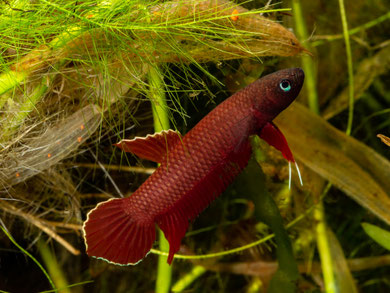
Betta mulyadii, long known in the aquarium hobby under the provisional name Betta sp. “Api Api” (also traded as sp. Riau, sp. Apiapi, sp. Bagan Siapiapi), is a small member of the coccina group of Bettas that only entered the hobby around 2013. This species originates from peat swamp habitats on Sumatra, where it inhabits soft, acidic blackwater; accordingly, successful long‑term care in the aquarium requires low‑mineral, strongly humic water conditions similar to those recommended for other members of the coccina complex.
Information on the exact distribution of Betta mulyadii remains scarce and partly contradictory. Locality data reported in the hobby range from the Bagan Siapiapi area in coastal northern Riau Province to sites near the provincial capital Pekanbaru, and further south to Tanjung Api Api near the Musi River in South Sumatra (Sumatera Selatan). Since fish have been exported under the name sp. “Bagan Siapiapi”, and the formal description is based on material from peat swamps in Riau and Jambi, a core distribution in northern and central eastern Sumatra appears most plausible.
Within the coccina group, Betta mulyadii belongs to the red, small‑bodied forms. In contrast, comparable red coccina‑type species such as Betta rutilans and the form known as Betta sp. “Wajok” occur on Borneo (Kalimantan), while only populations of Betta persephone and Betta cf. coccina are currently confirmed from Sumatra aside from B. mulyadii. The formal description diagnoses B. mulyadii by its small size, reddish males lacking a green iridescent mid‑lateral patch, and red unpaired fins with bright bluish margins, combined with relatively few dorsal‑fin rays (8–10) and 5–6 subdorsal scales and a comparatively short dorsal‑fin base.
Betta mulyadii has a reputation among aquarists for being difficult to maintain and breed. I do not share this assessment, although I have noticed that this species tends to be somewhat more aggressive than many other members of the coccina complex, especially among males. For this reason I keep my B. mulyadii in heavily planted, densely structured tanks that offer plenty of cover and visual barriers. The males readily construct bubble nests in small, covered cavities such as film canisters or under floating leaves, and will guard the eggs and fry in typical bubble‑nest‑builder fashion.

Bubble nest
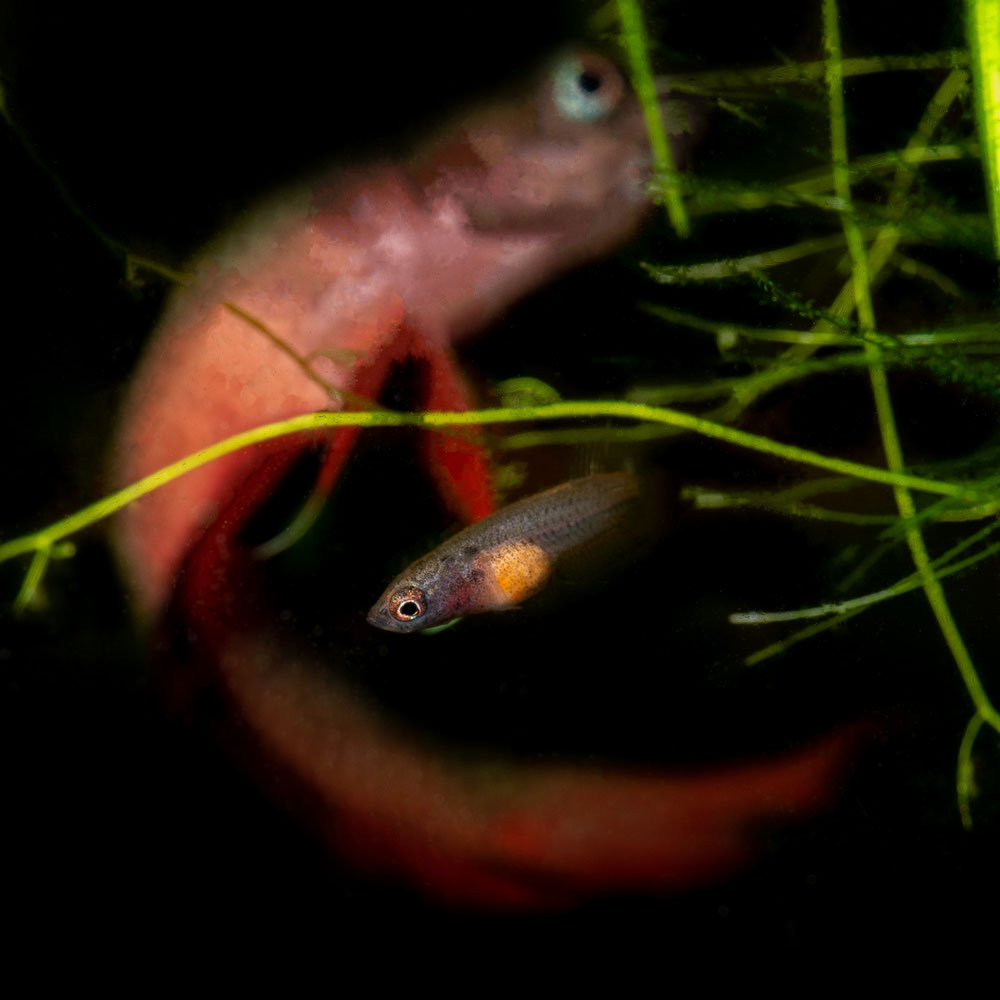
juveniles