Malpulutta kretseri - Breeding report
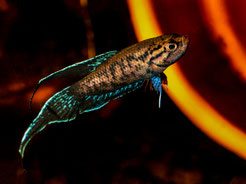
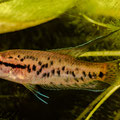
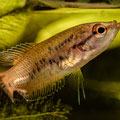
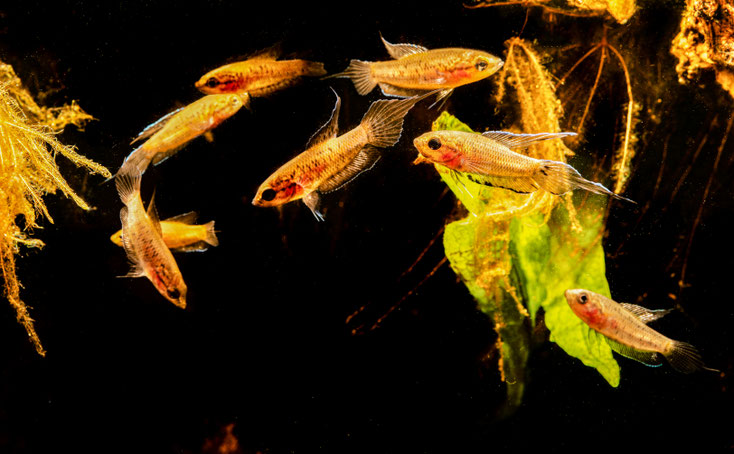
Malpulutta kretseri (Deraniyagala, 1937) are without doubt among the most beautiful wild labyrinth fish. In the labyrinth fish scene they are rare and highly sought after, and many other aquarists are not even familiar with them. Since the mid‑1990s there have been no imports from Sri Lanka (see “Fisheries and Aquatic Resources Act Number 02 of 1996”), so the specimens in the hobby are exclusively captive-bred. They almost could have been a good example of successful species conservation in the aquarium. Unfortunately, only almost, because the number of people working with them is very small. Accordingly, captive-bred specimens are also only very rarely available in the trade.
Malpulutta kretseri are currently listed as endangered (EN) on the IUCN Red List. For their protection and to preserve their habitats, conservation attempts have been carried out in Sri Lanka, but unfortunately very little information is available on how these measures were implemented. It was reported to me verbally that these efforts have largely not been successful.
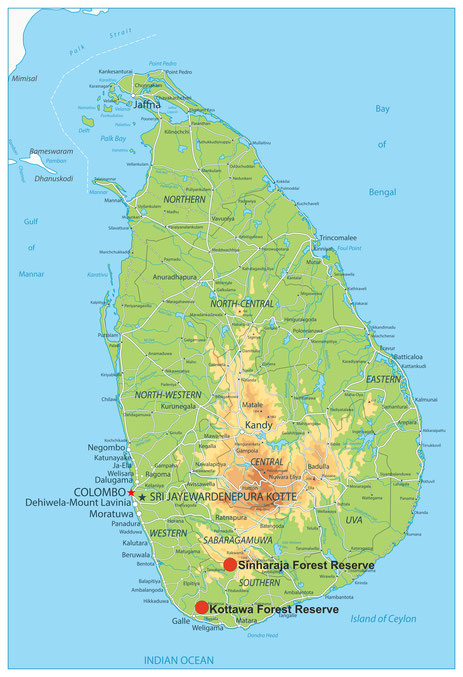
The IUCN website provides a good overview of the species’ distribution and known localities, which are mostly in the southwest of Sri Lanka (https://www.iucnredlist.org/species/12726/117405689). In the central-western part, the habitats have probably all been destroyed, which is particularly unfortunate because the type locality is also thought to have been there. In the German-speaking aquarium hobby, fish from two localities are currently kept: those from Kottawa Forest and Sinharaja Forest. The visual differences are, in my opinion, rather minor, although there are said to be localities with more pronounced variation. Unfortunately, it was only recently reported to me verbally that the condition of Kottawa Forest is said to have deteriorated significantly.
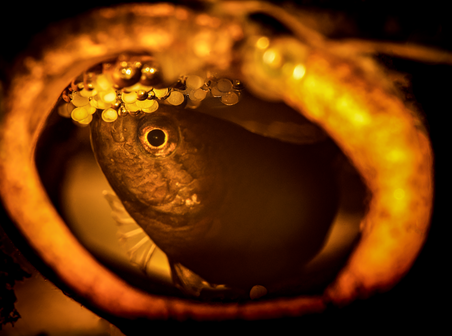
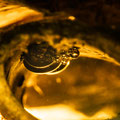
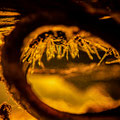
Malpulutta kretseri, which grow to about 3–6 cm, live in small, clear streams with very soft water, low current, temperatures around 25 °C, and a slightly acidic pH (around 6 to 6.5). The fish are often found near the banks, where they seek shelter under overhanging roots. The species tank should therefore be set up accordingly and covered very well. Similar to Parosphromenus, a small aquarium is sufficient for a pair, but it is important to offer hiding places in the form of caves and roots; floating plants are also recommended. They are bubblenest builders, usually placing the nest in a cave, where it is guarded by the male. In practice, various sizes of clay caves can be offered in the aquarium. If such caves are not present, willing pairs will also choose alternatives, such as the underside of a root. The bubblenest is guarded by the male, although when observing one pair, it was noticeable that the female stayed at the nest in the male’s absence. However, this may have been shortly after spawning.
After a few days, the fry become free-swimming; at this point, the usually manageable number of juveniles can be removed and, for example, placed in a breeder box within the main tank. This step is not strictly necessary, and they can also be raised together with the parents. In addition, there is a risk of injuring the delicate juveniles during transfer. As a first food, egg yolk is recommended until they are able to take Artemia nauplii. It takes many months for the fish to reach adult size; at least subjectively, they grow very slowly. A good and varied supply of small live foods is important, such as Artemia nauplii, Moina macrocopa, and vinegar eels. Frozen food, on the other hand, is not accepted by my fish, although it is said to be possible.
It would be wonderful if aquarists in Austria could also become enthusiastic about this monotypic genus and thus contribute further to its conservation. I hope this text has sparked some interest!